Understanding Ectopic Pregnancy: Symptoms and Next Steps
Ectopic pregnancies are uncommon, but they require prompt medical attention if they occur. Knowing the signs of ectopic pregnancy can help you seek care early if needed. Here, you’ll find more about what an ectopic pregnancy is, the symptoms to watch out for, possible risk factors, and the treatment options your GP or midwife may discuss with you.

What Is an Ectopic Pregnancy?
In a typical pregnancy, a fertilised egg travels down the fallopian tube and attaches to the uterus, where it begins to grow. In an ectopic pregnancy, however, the egg implants outside the uterus, usually in the fallopian tube, a condition known as a tubal ectopic pregnancy. If a tubal ectopic pregnancy progresses without treatment, it can cause the fallopian tube to burst, leading to internal bleeding that needs urgent medical attention.
For those who conceived through IVF, there’s a slightly higher chance of a heterotopic pregnancy, when the usual pregnancy happens at the same time as an ectopic pregnancy, although this is very rare in natural conceptions.
How Common Is Ectopic Pregnancy?
Ectopic pregnancies are relatively rare, occurring in about 1 in every 90 pregnancies in the UK, which accounts for roughly 11,000 cases each year.
What Causes an Ectopic Pregnancy?
The exact cause of an ectopic pregnancy isn’t always clear, but factors that affect the fallopian tubes, such as inflammation, scarring or structural issues, may play a role.
Does Ectopic Pregnancy Show on a Pregnancy Test?
Yes, a pregnancy test may still show positive if you have an ectopic pregnancy. This is because home pregnancy tests detect the hormone hCG, which is produced even if the fertilised egg has implanted outside the uterus. However, an ectopic pregnancy requires medical attention, so consult your GP or midwife if you have concerns.
Ectopic Pregnancy Symptoms
Recognising the signs early can be challenging, as some symptoms of ectopic pregnancy overlap with typical early pregnancy symptoms. Symptoms may start very early on, even before you know you’re pregnant. It’s helpful to be aware of these early signs of ectopic pregnancy, especially if you’re around 4 to 12 weeks along. Common symptoms include:
If you notice any of these signs of ectopic pregnancy, especially if they worsen or are accompanied by sharp pain, seek urgent medical attention.
Early Signs of Ectopic Pregnancy
Early signs of ectopic pregnancy can feel similar to normal pregnancy symptoms in the first trimester, such as a missed period, nausea (commonly known as morning sickness) or tender breasts. This similarity can make it difficult to detect an ectopic pregnancy early on. However, if you experience any unusual symptoms like vaginal bleeding or sharp pelvic pain, it’s important to reach out to your GP or midwife for advice.
Ruptured Ectopic Pregnancy Symptoms
If an ectopic pregnancy progresses without treatment, it can lead to a rupture of the fallopian tube, a serious condition that requires immediate medical attention. You should contact your GP, go to A&E or call 999 if you experience any of the following symptoms:
Only a medical professional can confirm a diagnosis, so it’s essential to seek help if you notice these symptoms.
Ectopic Pregnancy Risk Factors
While ectopic pregnancy can occur without any known risk factors, certain factors may increase the likelihood:
Ectopic Pregnancy Diagnosis
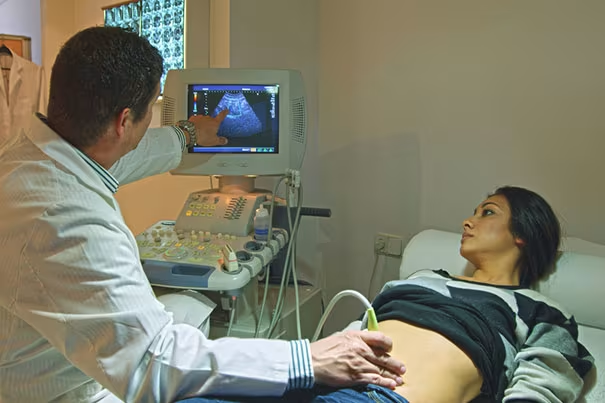
Diagnosing an ectopic pregnancy usually involves a combination of assessments, as early symptoms can resemble those of a typical pregnancy. If an ectopic pregnancy is suspected, your GP or hospital may perform the following:
If results are inconclusive, your GP may repeat tests over a few days to monitor hCG levels and other indicators.

Ectopic Pregnancy Treatment
As an ectopic pregnancy can’t develop outside the uterus, treatment is essential. Your doctor may recommend either medication or surgery, depending on your situation. If the pregnancy is detected early, methotrexate may be used to safely stop its growth. However, if medication isn’t suitable or there are complications, a surgical procedure called laparoscopy may be needed to remove the pregnancy, and sometimes the affected fallopian tube. Your doctor will guide you on the best approach and arrange any necessary follow-up care to support your recovery.
Medication: Methotrexate for Ectopic Pregnancy
If an ectopic pregnancy is diagnosed early and active monitoring isn’t suitable, methotrexate may be recommended. This injection in the buttock stops the pregnancy from growing, allowing the body to absorb the tissue gradually.
Regular blood tests are needed to ensure the treatment is working, and occasionally a second dose may be necessary. If methotrexate isn’t effective, surgery may be required.
After treatment, it’s essential to use reliable contraception for at least three months, as methotrexate can harm a developing baby if you become pregnant again. Avoid alcohol until your doctor confirms it’s safe, as it can increase the risk of liver damage.
Common side effects include mild tummy pain, dizziness, nausea and diarrhoea. In rare cases, the fallopian tube may rupture after treatment, so you’ll be advised on symptoms to watch for and when to seek urgent help.
Ectopic Pregnancy Surgery
In most cases, an ectopic pregnancy is removed through keyhole surgery (laparoscopy) before it grows too large. This involves small incisions in the abdomen under general anaesthetic, allowing the surgeon to remove the affected fallopian tube or, in some cases, just the pregnancy tissue if the other tube is healthy. Removing the tube is usually the most effective option and doesn’t typically affect future fertility.
If the fallopian tube has already ruptured, emergency surgery with a larger incision (laparotomy) may be needed to stop bleeding and repair the tube if possible.
After surgery, those with an RhD-negative blood type will receive an injection to prevent rhesus disease a condition that can occur if your blood is Rh-negative and your baby’s blood is Rh-positive. When this happens, your immune system may produce antibodies that attack your baby’s red blood cells, leading to a dangerous form of anaemia. The injection helps prevent this incompatibility in future pregnancies. Most people can leave the hospital within a few days, with full recovery usually taking four to six weeks.
Most people are able to leave the hospital within a few days. Recovery usually takes four to six weeks, allowing time for both physical healing and emotional adjustment.
How to Avoid an Ectopic Pregnancy
While you can’t fully prevent an ectopic pregnancy, some steps may help reduce your risk. Using condoms when not trying to conceive can protect you against sexually transmitted infections (STIs), and quitting smoking if you smoke can also lower your risk.
Planning a pregnancy? It’s a good idea to speak with your GP if you have any known risk factors, as they can provide personalised advice. For insights into early pregnancy signs, try our ‘Am I Pregnant?’ quiz.

Am I Pregnant?

Wondering if you might be expecting? Whether you're noticing subtle signs or experiencing stronger symptoms, your body may be sending signals that it's time to ask: “Could I be pregnant”?
Our pregnancy quiz is a quick and helpful way to explore early signs of pregnancy. It’s designed to provide you with insights and help you determine if it’s time to take a pregnancy test.
Why take our quiz?
Instant Results
Easy and Stress Free
Personal Insights
Getting Emotional Support
Losing a pregnancy can be an incredibly emotional experience, bringing feelings of profound grief and sadness that take time to process. These feelings often ease over time, but giving yourself and your partner space to grieve is important.
If you’re finding it hard to cope, consider speaking with your GP about counselling or seeking a support group where others share similar experiences. Professional support can be beneficial, whether you’re going through this on your own or with loved ones by your side.
FAQS AT A GLANCE
No - typically, your tummy does not grow with an ectopic pregnancy. As the fertilised egg implants outside the uterus, it can't develop as a normal pregnancy would.
The Bottom Line
Ectopic pregnancies are relatively rare, but if you notice any symptoms mentioned in this article, like lower back or pelvic pain or unusual vaginal bleeding, it’s best to consult your GP for guidance. If you are diagnosed with an ectopic pregnancy, your GP will go over the treatment options with you.
- Ectopic Pregnancy Trust. 'Diagnosing an Ectopic Pregnancy'
- Ectopic Pregnancy Trust. 'Reasons for an Ectopic Pregnancy'
- King’s College Hospital. 'Ectopic Pregnancy'
- NHS. 'Doing a Pregnancy Test'
- NHS. 'Ectopic Pregnancy'
- NHS. 'Ectopic Pregnancy Diagnosis'
- NHS. 'Ectopic Pregnancy Symptoms'
- NHS. 'Ectopic Pregnancy Treatment'
- Tommy’s. 'Ectopic Pregnancy Information and Support'
Read more about Pregnancy





Join Pampers Club and get:
- PAMPERS COUPONS
- TOOLS & QUIZZES
- PARENTING TIPS
 PAMPERS COUPONS
 TOOLS & QUIZZES
 PARENTING TIPS